
How we keep this page current: We review this page at least every six months, or sooner after changes to pension, tax or FCA rules.
At a glance
- Multiple pension pots can make retirement income harder to plan.
- Consolidating pensions can help, but only after checking each pot properly.
- Older pensions may include valuable guarantees or protected tax-free cash.
- Some “low risk” pension funds may not suit a long retirement.
Why multiple pension pots need proper attention
Many business owners and high earners reach retirement with multiple pension pots from old jobs, personal pensions a director’s pension, and a few workplace schemes from earlier roles. You may also have a final salary style pension sitting alongside them. If you live in Cirencester, the Cotswolds or across Gloucestershire, this is a common reason to seek pension advice before making consolidation decisions.
On paper, each pension may look fine. Together, they can become hard to manage.
One recent client couple came to us with seven pensions between them. They had built strong careers in IT and consultancy. They had saved well. Yet six of the seven pensions had failed to keep pace with inflation over the previous five years. No one had reviewed the full picture, so they had not seen the problem. It is a useful reminder that pension paperwork rarely tells the full story.
Consolidation sounds neat: one provider, one login and one investment approach. That can work well, but it is worth checking what you already have before moving anything.
If you are starting with the basics, read our guide to combining pensions before retirement first. It explains what pension consolidation means, when it may help and when you may need to pause before transferring.
Check 1: your “safe” pension may not suit your retirement
Many workplace pensions automatically move your money around as you get closer to the scheme’s chosen retirement age. They often reduce exposure to “growth assets”, such as shares, and increase exposure to “defensive assets”, such as bonds or cash.
Pension providers often call this lifestyling. The important point is that the scheme’s chosen retirement age may simply be a default date, rather than the date you actually plan to retire. That means your pension may be moved into lower-growth funds which may not be part of your plan.
That may suit someone who plans to buy an annuity at retirement. An annuity turns a pension pot into a guaranteed income, usually for life. MoneyHelper explains that annuities give guaranteed income, while drawdown keeps money invested and lets you take flexible withdrawals.
Many Abode Financial Planning clients want flexibility instead. They may work part-time, sell a business, draw from ISAs, delay pension withdrawals, or phase into retirement over several years. That means the pension may need to stay invested for decades, so the level of risk should match a long term retirement plan.
A fund that looks calm today may still carry a risk if it fails to grow enough after inflation.
Cash and low-risk funds have a place, particularly for short term spending and peace of mind. Long term retirement money has a different job: it needs to support income for the rest of your life.
Check this before you consolidate:
- What funds are you invested in?
- Has your pension moved into a lifestyle, target date or retirement pathway fund?
- Does the investment approach match drawdown, an annuity, or a phased retirement?
- How much cash do you need for the first few years of spending?
The FCA’s investment pathways are designed to help people in drawdown choose investments linked to broad retirement aims. They are useful, but they do not replace personal advice based on your own tax, spending and family position.
Check 2: old pensions may not give you the income options you need
Retirement income often comes from several places.
A business owner in Cirencester or the Cotswolds may have company sale proceeds, cash savings, ISAs, rental income, dividends, pensions and later, a State Pension. A high earner may also have bonuses, deferred pay or consultancy income.
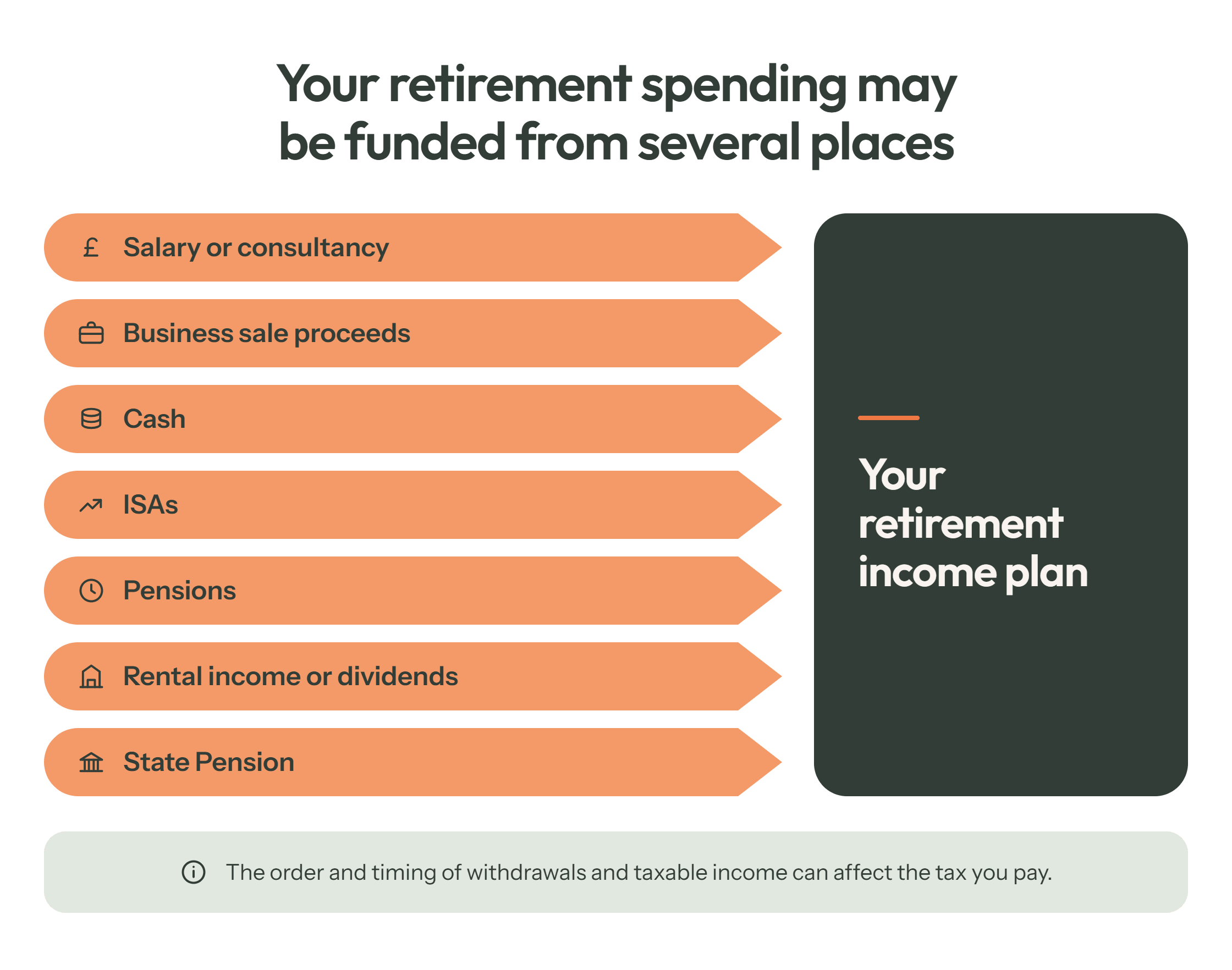
The order and timing of these income streams matter, and so does the tax. GOV.UK lists several ways to take a pension, including drawdown, annuities and lump sums.
Modern pensions often offer flexi access drawdown. This means your pension stays invested and you take taxable income when you need it.
Some older pensions do not offer full flexibility when it comes to income withdrawals.
They may only offer an annuity, or they may allow lump sums without proper drawdown.
That can create awkward results. One pension may pay a fixed income before you need it, another may be hard to access, and a third may sit in funds that no longer match your plan.
A retirement income plan helps you decide:
- which pension to use first, or if combining pensions is the right answer for you
- when to use ISAs or cash instead
- how to manage income tax year by year
- how to plan as a couple, not just as individuals
Providers can give facts about their own pension, but they cannot plan your whole retirement unless they are giving regulated advice.
Check 3: some old pensions are worth more than they look
Some pensions contain benefits that disappear when transferred, which is one of the main reasons to slow down before consolidating.
Pension schemes may include special features, such as protected tax free cash above the usual 25% limit. It’s worth checking for these features before taking benefits or transferring.
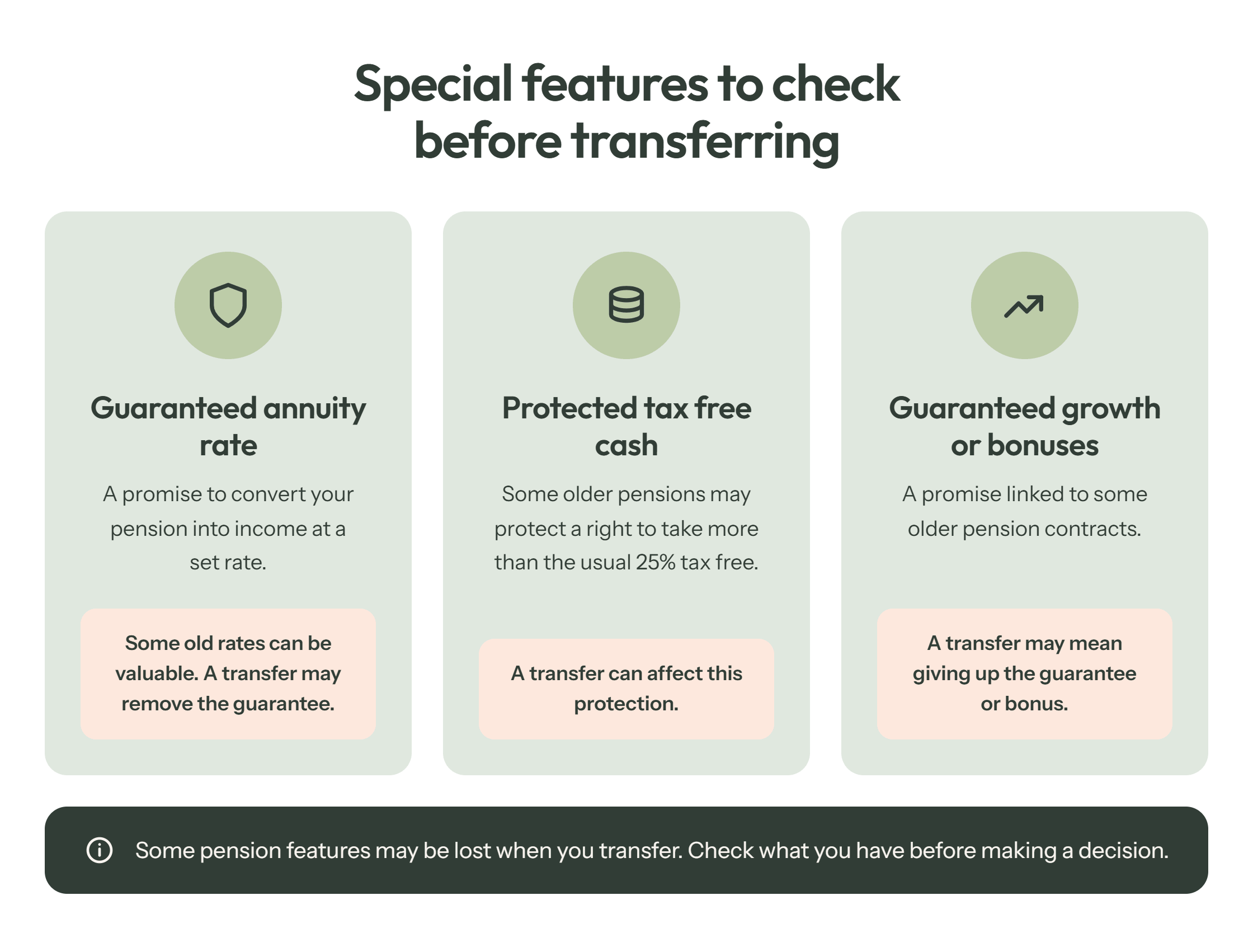
There is also an advice rule. If you want to transfer pension benefits with guarantees worth more than £30,000, the scheme normally needs evidence that you have taken appropriate independent advice.
These rules protect people from giving up valuable benefits without understanding the trade off.
For many clients, the answer is mixed. Some pensions are best left where they are, while others may be worth moving or need specialist pension advice. Each pot should be reviewed on its own merits before you make a decision.
What about final salary style pensions?
Final salary style pensions are often called defined benefit pensions.
They usually pay a guaranteed income for life. Some include inflation increases and spouse’s benefits. For many high earners and business owners, this income forms the base of the retirement plan.
The main planning question is often how this income fits with everything else.
You may need to decide:
- when to start the pension
- whether to take a tax-free lump sum
- how much income you need before State Pension age
- which assets to use first
- how to avoid unwanted tax in high income years
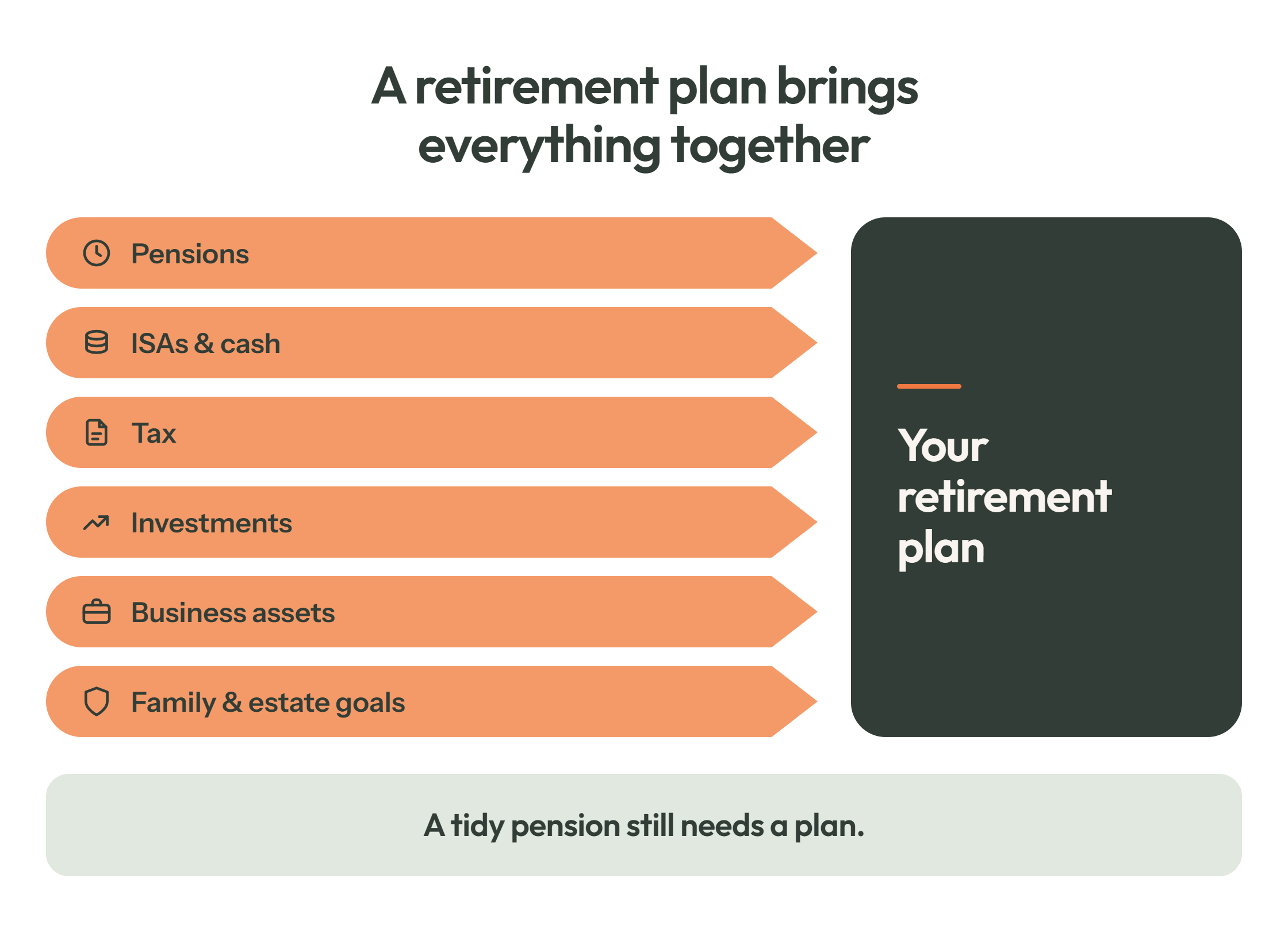
Abode Financial Planning can build your wider retirement plan around these pensions. That includes your other pensions, ISAs, cash, investments, business assets and family goals.
Why consolidation alone does not solve the problem
Consolidating pensions can reduce paperwork, improve investment choice and make drawdown easier. Even then, a tidy pension still needs a plan.
| Question | Why it matters |
|---|---|
|
How much can I spend each year? |
Your answer depends on tax, inflation, investment returns and life expectancy. |
|
Which pot should I use first? |
The order of withdrawals can change your tax bill. |
|
Should I take tax-free cash? |
Useful in some cases. Less useful in others |
|
What risk should I take? |
A long retirement needs careful balance. |
|
What should stay where it is? |
Guarantees and protected benefits can be valuable. |
Transferring or combining defined contribution pensions may leave you worse off, so advice may be worth considering.
A good plan gives you one clear view of your pensions, ISAs, cash, tax, investment risk, estate planning and family support.
That clarity helps you make decisions calmly.
Are your pensions on track for retirement?
Bringing pensions together may make them easier to manage, but consolidation does not tell you whether you are saving enough for retirement. Our retirement readiness checker lets you compare your current defined contribution pension savings with an illustrated retirement target.
A practical checklist before you consolidate
Use this before moving any pension.
1. List every pension
Include provider, value, charges, investment funds, retirement age and policy number.
2. Check the pension type
Is it defined contribution, defined benefit, with-profits, executive pension, SIPP or old personal pension?
3. Ask about guarantees
Look for guaranteed annuity rates, protected tax free cash, guaranteed growth rates, protected pension ages and exit charges.
4. Check income options
Does the pension offer drawdown, annuities, lump sums, or only limited choices?
5. Review investment risk
Find out whether the pension has been moved into a lifestyle, target date or pathway fund.
6. Map the tax
Add salary, dividends, rental income, pension income, State Pension, ISAs and cash to one year by year plan.
7. Get advice before moving valuable benefits
This matters most where guarantees, final salary style pensions or safeguarded benefits are involved.
How Abode Financial Planning can help
Abode Financial Planning is an independent, Chartered financial planning firm based in Cirencester.
We help business owners, high earners and families across the Cotswolds make sense of multiple pension pots before retirement. That starts with a full review of what you already have.
We contact all the pension providers for you and check each plan carefully, including:
- whether it offers flexible income
- how it is invested
- what charges apply
- whether it has guarantees or protected tax free cash
- whether it should stay where it is, move, or form part of a wider plan.
This gives you a clearer view before making decisions that may be hard, or impossible to undo.
We can then help you build a retirement income plan that brings everything together: pensions, ISAs, cash, tax, investments, business assets and family goals.
That means answering the questions we are asked most often: which pension should you use first, which ones need further checks, how much can you draw each year, how should your money stay invested, and how can you take income without paying more tax than needed?
Helpful Abode Financial Planning pages:
Frequently asked questions
Only after checking each pension and confirming it is in your best interests. Consolidation can reduce paperwork and make income easier to manage, but older pensions may include guarantees, protected tax-free cash or other benefits that can be lost on transfer.
A guaranteed annuity rate is a promise in an older pension to convert your pot into income at a set rate. Some old rates are valuable. If you transfer the pension, you may lose the guarantee.
Most people can usually take up to 25% of a pension as tax-free cash, subject to pension tax rules and allowances. Some older pensions allow more than 25%.
You normally need independent financial advice before transferring safeguarded pension benefits worth more than £30,000. This often applies to defined benefit pensions and some pensions with guarantees.
Drawdown gives flexibility and keeps money invested. An annuity gives guaranteed income. The better choice depends on your secure income, tax position, health, spending needs and attitude to risk. GOV.UK and MoneyHelper explain the main pension income options.
Business owners should review pensions alongside company sale plans, dividends, cash reserves, ISAs, tax, investments and estate planning. Year by year planning helps because income can arrive from several places at once.
Yes. This is a common area of work for us. We can review your pensions, identify guarantees and restrictions, assess investment risk, build a retirement income plan and recommend which pensions to keep, move or use first.
Sources
- GOV.UK, pension benefits with a guarantee and the advice requirement.
- The Pensions Regulator, transfers out and advice requirement.
- MoneyHelper, transferring or combining defined contribution pensions.
- MoneyHelper, checking pension scheme special features.
- GOV.UK, how you can take your pension.
- FCA, investment pathways post-implementation review.
Sources
GOV.UK, pension benefits with a guarantee and the advice requirement.
The Pensions Regulator, transfers out and advice requirement.
MoneyHelper, transferring or combining defined contribution pensions.
MoneyHelper, checking pension scheme special features.
GOV.UK, how you can take your pension.
FCA, investment pathways post-implementation review.
Book a pension review call
If you want pension advice in Cirencester, the Cotswolds or across Gloucestershire, book a free initial call with Abode Financial Planning.
Contact Abode Financial Planning:
Call: 01285 703 060
Email: hello@abodefinancial.co.uk
Office: Watermoor Point, Watermoor Road, Cirencester, GL7 1LF
Compliance disclaimer
This article is general information, not personal advice. Pension and tax rules can change, and outcomes depend on your circumstances. The value of investments can fall as well as rise, and you may get back less than you invest. Seek regulated financial advice before making pension transfer, consolidation or retirement income decisions.
You might also be interested in...

Multiple pension pots? What to check…
How we keep this page current: We review this page at least every six months, or sooner after changes to...
Read more
A Guide to Combining Pensions Before…
How we keep this page current: We review this guide at least every six months, or sooner after pension, tax...
Read more
Pension contributions for high earners
At a glance The standard annual allowance is £60,000 for 2026/27.High earners may have a lower allowance if threshold income is...
Read more