Written by Daniel Boden CFPTM FPFS, Chartered Financial Planner, Abode Financial Planning .
At a glance
- Combining pensions can make retirement easier to manage, but you do not need to move everything into one place.
- Check each pension for fees, investments, guarantees, protected benefits and retirement options before transferring.
- Final salary pensions need extra care because transferring can mean giving up guaranteed income and other benefits.
- Some pensions may be worth combining, while others may be better left where they are.
Why this question matters before retirement
By the time retirement feels close, you may have pensions from several different jobs.
Perhaps there is an old workplace pension, a personal pension, a current employer scheme and a final salary pension. Add ISAs, cash and the State Pension, and the picture can become hard to follow.
That is often when one question comes up: should I combine my pensions before retirement?
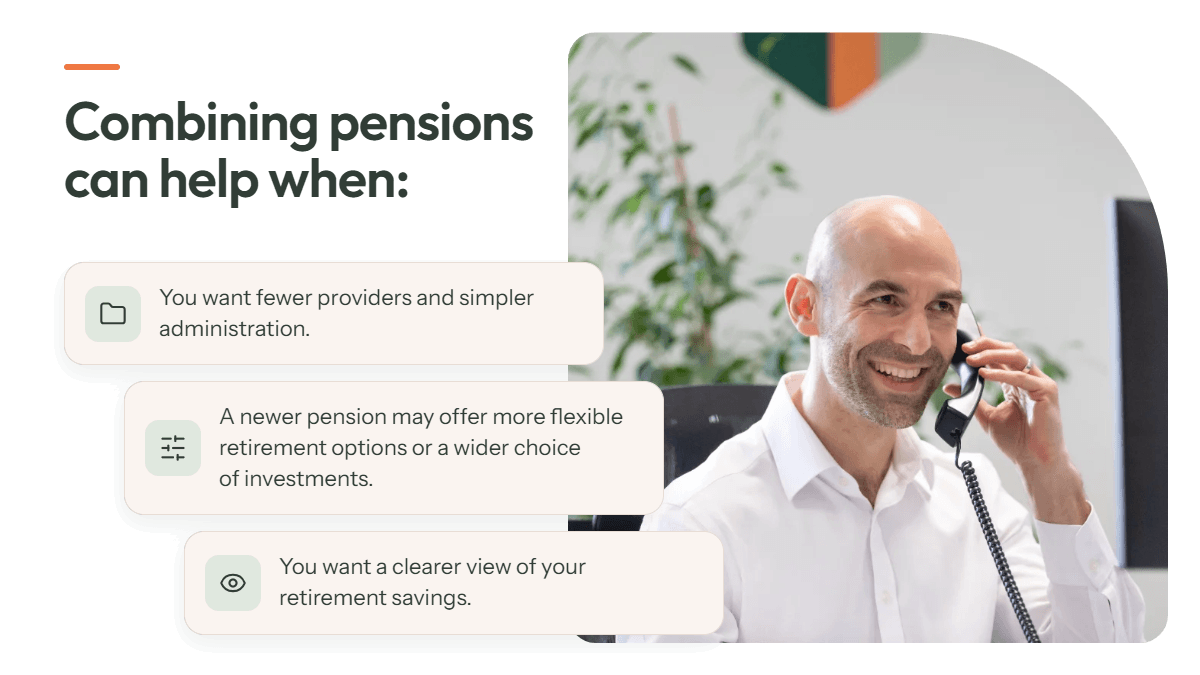
Combining some pensions can make life easier. You may have fewer providers, fewer statements and a clearer view of your retirement savings. But transferring without checking for special guarantees or features first can mean losing benefits you cannot get back.
If you are new to pension consolidation, start with our guide to combining pensions. It explains what consolidation means, how transfers work and the main advantages and disadvantages.
When combining pensions can help
Bringing some defined contribution pensions together may make retirement planning simpler.
A newer pension might offer more flexible ways to take money or a wider choice of investments. Having fewer pots can also make annual reviews easier.
This matters if retirement will happen gradually. You may reduce your hours first, then use pension withdrawals to cover the gap before your State Pension starts.
MoneyHelper’s guide to pension drawdown explains that drawdown can let you leave money invested and take income when you need it.
Fees matter too. A new plan is not automatically cheaper. Some workplace pensions have low fees, so compare the whole pension before moving. MoneyHelper also recommends checking fees, withdrawal options and any benefits you may lose before consolidating pensions.
Fees matter, but service matters too. Service levels vary between providers, and some lower-cost pensions may offer more online support and less access to telephone or personalised help. Compare the service you want as well as the fees you pay.
What should you check before transferring?
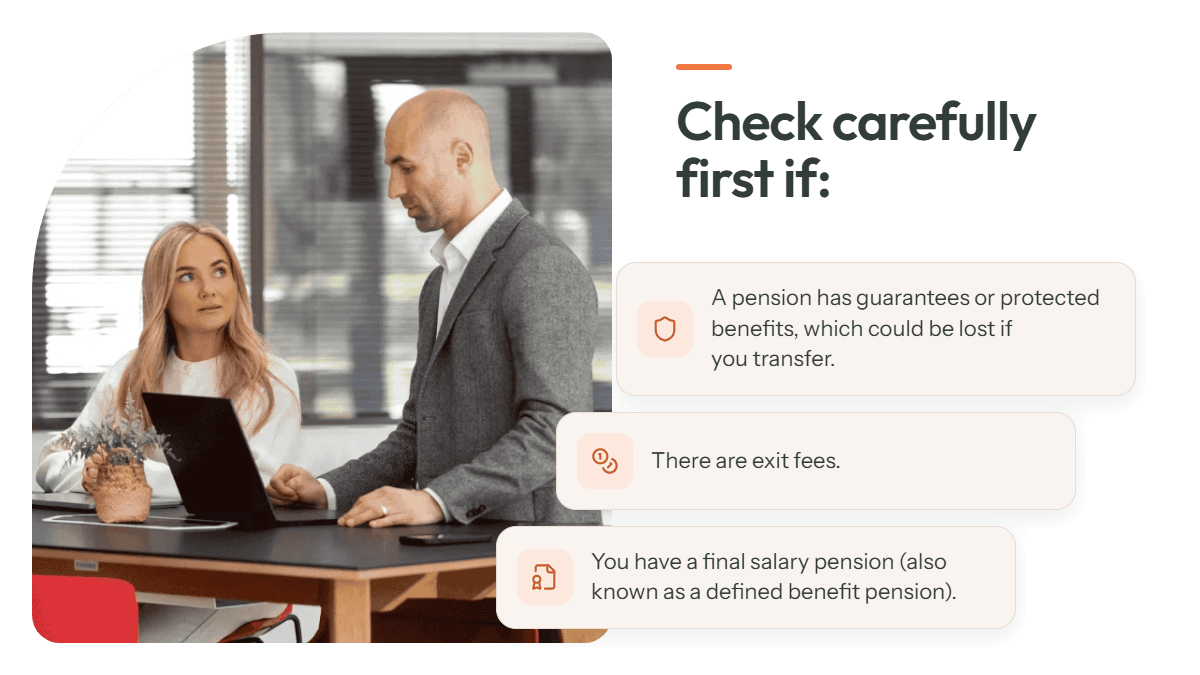
Older pensions can contain benefits that are easy to overlook, including guaranteed annuity rates, guaranteed growth rates, protected tax-free cash, protected pension ages or other guarantees. Some also charge an exit fee.
Those benefits can be valuable, and some may be lost when you transfer. MoneyHelper’s pension consolidation guidance explains the main features to check before moving a pension.
For 2026/27, most people can usually take up to 25% of their pension as tax-free cash, subject to the standard lump sum allowance of £268,275. Some people have protected allowances that allow a higher amount. GOV.UK explains the current lump sum allowance.
Our guide to what to check before consolidating pensions looks at these checks in more detail, including investments, guarantees, income options and how several pensions fit together.
Final salary pensions need extra care
A final salary pension, also called a defined benefit pension, works differently from a pension pot.
The scheme promises an income in retirement under its rules. That income may increase over time and may include benefits for a spouse, civil partner or dependant.
Transferring means giving up those promised benefits.
The FCA says that, for most consumers, transferring out of a defined benefit pension is unlikely to be in their best interests. If the cash equivalent transfer value of safeguarded benefits is more than £30,000, you must take regulated financial advice before transferring them to flexible benefits.
The useful question is how final salary income fits alongside other pensions, ISAs, cash and the State Pension.
Watch the tax timing if you are still working
Retirement income does not always start on the day you stop work.
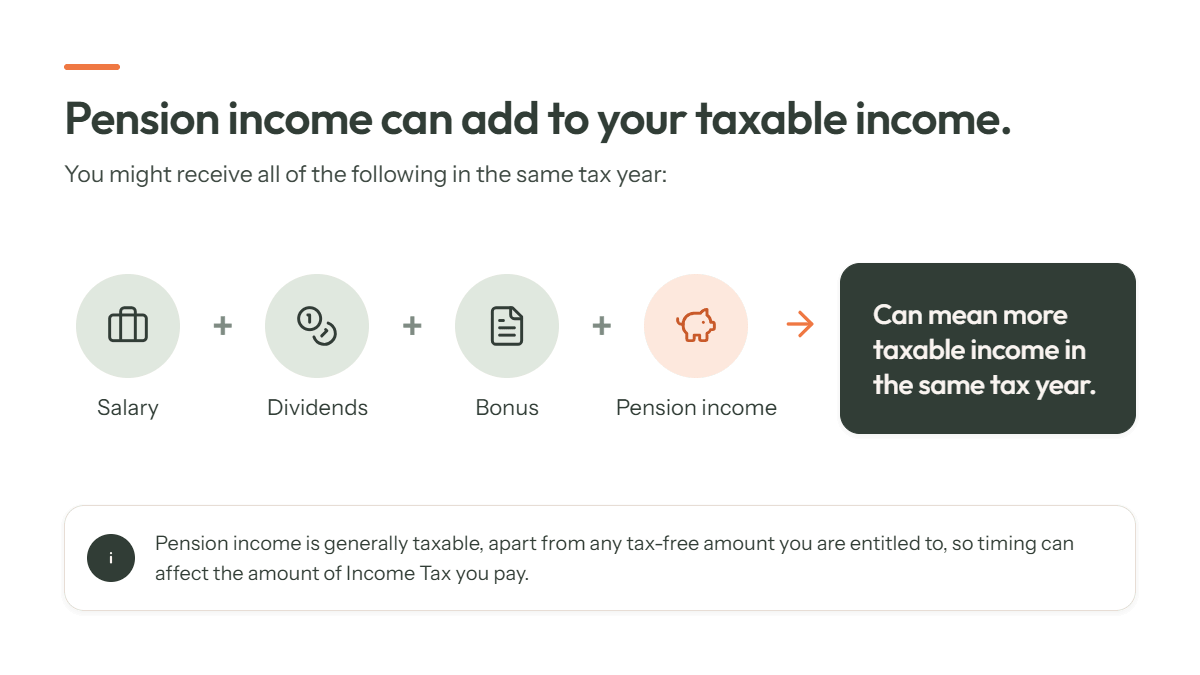
You might start taking a pension while you still receive salary, dividends, consultancy income or a bonus. Pension income is generally taxable, apart from any tax-free amount you are entitled to, so timing can affect the amount of Income Tax you pay. GOV.UK explains that your taxable income can include earnings, private pensions and the State Pension.
The full new State Pension is £241.30 a week in 2026/27, although your own amount depends on your National Insurance record.
Check the current State Pension rate on GOV.UK.
Looking at all your income together can help you decide when each pension should start.
Check how your pensions are invested
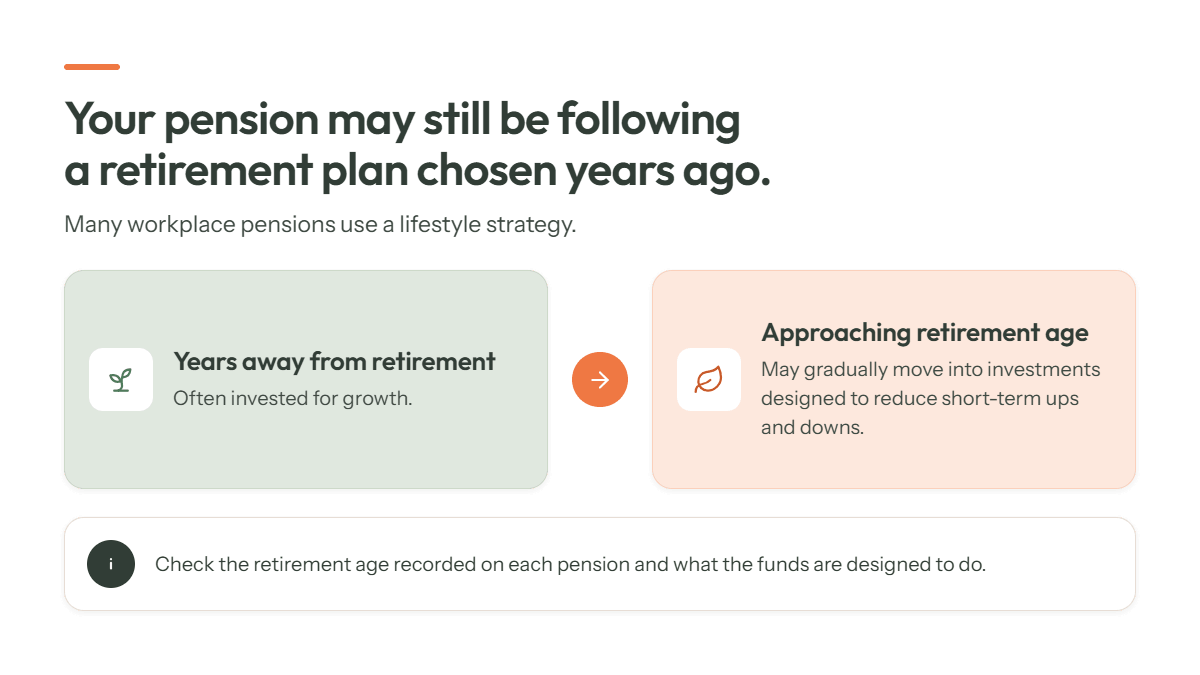
An old workplace pension may still be following a plan chosen years ago.
Many schemes use a lifestyle strategy. As your selected retirement age gets closer, the pension may gradually move into investments designed to reduce short-term ups and downs.
That may suit some retirement plans. If you expect to use drawdown and keep much of the pension invested for many years, the investment approach may need reviewing.
MoneyHelper notes that some default pension funds move money into more stable investments as normal pension age approaches. If you leave the pension invested beyond that point, you may miss some potential investment growth.
Check the retirement age recorded on every pension, then check what the funds are designed to do.
A simple example clients?
Take a 59-year-old professional living near Cirencester. He and his spouse have seven pensions between them: two final salary schemes, three old workplace pensions, a personal pension and a current workplace pension.
Their first thought is to combine everything.
A review finds that one old pension has a guaranteed annuity rate. Two workplace pensions use lifestyle funds based on retirement at 60. One final salary scheme also has a normal pension age of 60, while he expects to continue working.
The valuable guarantees need careful review. So does the investment approach and the timing of taxable pension income alongside earnings.
Consolidation may still form part of the plan, but only after each pension has a clear role.
What to check before combining pensions
Before transferring anything, gather the key facts for each pension:
- pension type and current value
- fees and investment funds
- selected or normal retirement age
- retirement and drawdown options
- transfer value and any exit fees
- guarantees, protected benefits and tax-free cash rights
- death benefits
Then look at the rest of your finances.
When do you want to reduce or stop work? What income will you receive from salary, dividends or bonuses? When will final salary pensions and the State Pension start? How much do you hold in ISAs, cash and other investments? What do you expect to spend?
Those answers turn separate pension statements into one retirement plan.
Are your pensions on track for retirement?
Combining pensions is only one part of the picture. Our Retirement Readiness Checker can help you put your pension savings into context and see how they compare with the retirement you have in mind.
How Abode Financial Planning helps
Abode Financial Planning is a Chartered, independent financial planning firm based in Cirencester.
We help professionals and business owners approaching retirement understand how their pensions fit together. We look at pensions alongside ISAs, cash, investments, tax and the income you need from retirement.
Sometimes consolidation forms part of the plan. In other cases, keeping a pension where it is protects a valuable benefit or provides useful guaranteed income.
The aim is to understand what each pension is for, then build a plan around the retirement you want.

Should I combine my pensions before retirement?
There is no single answer that works for everyone.
Combining some pensions may give you simpler administration and more flexibility. Other pensions may be worth keeping because of guarantees, low fees or valuable benefits.
Start by checking each pension. Then decide how each one fits into your wider retirement income plan.
Ready to talk?
If you are approaching retirement with several pensions from different jobs, we can help you make sense of them.
Book a free initial call with Abode Financial Planning to talk through your pensions, your retirement plans and whether consolidation is worth exploring.
Frequently asked questions
Not necessarily. Review each pension first. Some may include guarantees, protected benefits, low fees or final salary income that you would give up by transferring.
Yes, in some cases. A transfer can also move you from a low-cost scheme into a more expensive one. Compare fees alongside benefits, investment options and retirement flexibility.
Some final salary pensions can be transferred. Transferring means giving up guaranteed benefits. If safeguarded benefits are worth more than £30,000, regulated financial advice is required before transferring them to flexible benefits.
Check the pension type, fees, investments, retirement age, withdrawal options, transfer value, guarantees, protected benefits, tax-free cash rights and death benefits. Then consider how each pension fits with your other income, savings and retirement plans.
Important information
This article provides general information only and does not constitute personal financial advice. Pension and tax rules can change, and their impact depends on your circumstances. The value of investments, and the income from them, can fall as well as rise, and you may get back less than you invest. Past performance is not a guide to future returns. If you are unsure whether to transfer or combine pensions, seek regulated financial advice.
You might also be interested in...
Should I combine my pensions before…
Written by Daniel Boden CFPTM FPFS, Chartered Financial Planner, Abode Financial Planning . At a glance Combining pensions can make retirement easier...
Read moreNew ISA rules: will interest in…
Reviewed by Daniel Boden CFPTM FPFS, Chartered Independent Financial Planner at Abode Financial Planning If you have built up ISA savings,...
Read moreIs £1 million enough to retire?

Retiring with a pension pot of £1 million As retirement approaches, those who have diligently saved to build a considerable...
Read more